

We’ve been counting down 50 products from 50 years of Apple to celebrate the iconic company’s anniversary, with 10 products revealed each day. Check out all our 50 years of Apple features so far.
Here, we’re counting down the top ten Apple products of all time – and it naturally includes some of the most innovative and iconic stuff Apple has ever done, along with the odd surprise.
Remember that this is the collective opinion of the Stuff team – everyone nominated their favourite Apple products and then this was collated into the results below. So if your favourite isn’t in here, you know who to blame!
50–41 | 40–31 | 30–21 | 20–11 | 10–1
10. iPhone 4 (2010)
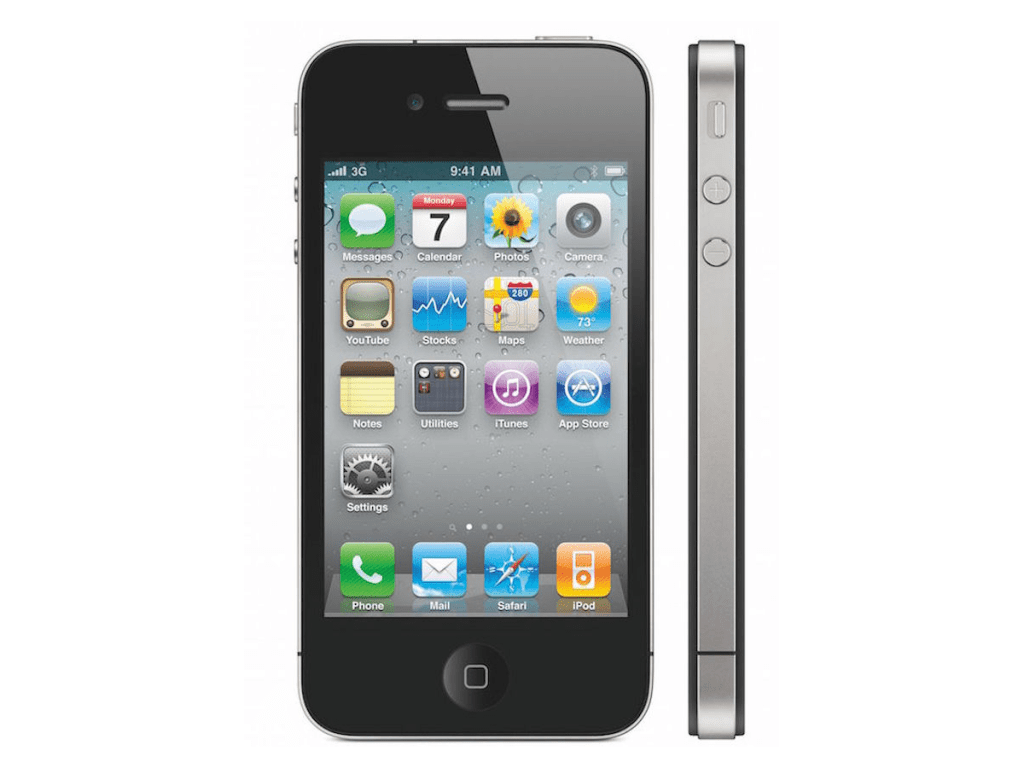
For team Stuff, this is when the iPhone grew up and the iPhone 4 is a firm favorite. The glass front and back, wrapped in stainless steel, looked gorgeous. Steve Jobs likened it to a Leica. The classic design later informed many Apple products.
Apple’s “biggest leap since the original iPhone” also added an eye-popping Retina display, a gyro, multitasking and a front camera for FaceTime. Almost perfect – except that steel band doubled as part of the antenna system. If you held it wrong, the signal tanked.
Apple later ate humble pie, handing out free ‘bumper’ cases, while Jobs grumbled that even Apple hadn’t “figured out a way around the laws of physics”.
9. iPod – 1st generation (2001)

When you can stream 100 million songs on demand, a thousand in your pocket seems quaint. But options were limited in the early 2000s: a dozen songs on CD or bulky hard drive gadgets.
Apple’s breakthrough was discovering a tiny 5GB Toshiba drive that allowed the 1st gen iPod shrink to the size of a deck of cards. Then came the scroll wheel, which let you zip from Abba to ZZ Top in seconds. FireWire made transfers blazing fast too, filling the iPod in minutes rather than hours.
Smartphones and streaming eventually stole the iPod’s thunder, but it’s enjoying a second wind as Gen-Z discovers devices that do one thing well and keep the internet at bay.
8. iMac G4 (2002)

Never has a computer had quite as much personality as the iMac G4. Marking Apple’s shift from CRTs to LCDs, it took inspiration from sunflowers, which explains the curiously organic design. The guts lived in a hemispherical base, while the display perched on an adjustable arm (of the kind modern Macs could do with) that you could move with the lightest touch. Jony Ive said the white finish was intended to be “pure and quiet”, slightly at odds with this iMac’s playful demeanour – the thing looked like it had sprung forth from a Pixar movie, ready to hop across your desk.
7. iPod – 4th generation (2004)

The final monochrome iPod climbs high on this list – and deservedly so. The design was sharp, abandoning glowing retro buttons for the iPod Mini’s click wheel. Battery life got a boost and the device stayed gloriously focused. The world could probably have done without the midlife-crisis U2 Special Edition, though, with its lurid black-and-red front and engraved band signatures scrawled on the rear. That must have been a shock to the system too, because the iPod then had an identity crisis. Subsequent revisions also pitched the device as a photo viewer and video player, despite the tiny colour screen being good for neither.
6. iPad – 1st generation (2010)

The pitch for iPad was simple: the internet in your hands. Apple reckoned there was room between smartphones and laptops, and the result was – depending on your viewpoint – a giant smartphone without the phone bit or a laptop with a touchscreen but the keyboard sawn off. Detractors insisted it couldn’t handle ‘proper work’. Advocates quickly proved otherwise and the iPad found a place in artist studios, schools, boardrooms and factories. Still, it worked best as Steve Jobs first showed on stage: with you lounging in an armchair, thumbing through the web and photos, on a device that felt infinitely cosier than any laptop.
5. MacBook Air (2008)

A rabbit out of a hat? Pfft! Steve Jobs pulled a laptop from an office envelope. And the world of computing was never quite the same again.
Sure, the MacBook Air had its issues. It was spendy, the paltry on-board storage would make you think twice about loading your entire media library on to the thing, there was no optical drive, and you got just one USB port. And that was hidden behind a flip-down door.
None of that mattered when it felt like you were holding the future in your hands. And say what you will about Apple’s subsequent obsession with thin (Stuff would argue it went way too far), but making laptops less bulky while giving them far more clout than netbooks of the day was a genuine leap forward.
The rest of the industry clearly agreed. After the usual bout of declaring that the MacBook Air was the worst idea ever, rivals dusted off their photocopiers and started churning out ultrabooks of their own.
4. AirPods Pro – 1st generation (2019)

The term ‘pro’ had long lost meaning in Apple products before these beefed-up AirPods arrived. They certainly weren’t just for folks in the music biz. Instead, they could have been called AirPods More Expensive But Better. At least had Apple’s marketing team gone rogue.
Said ‘better’ bits were superior fit, enhanced audio and improved controls. Three silicone tip sizes made the buds more snug and bolstered sound. The stems were smaller than those on the AirPods but offered more utility. Instead of tapping buds to trigger actions, you pressed the stems to pause audio, answer calls, skip tracks and activate Transparency mode (to avoid being flattened by a bus) or Active Noise Cancellation (to block out people asking why you were constantly pinching your earbuds).
Sure, they cost a small fortune. But it was worth it to immerse yourself in glorious audio all day long – or sneakily wear them in the office with ANC on but music off, occasionally nodding, just so no one would bug you.
3. iPhone 3G (2008)

It’s easy to forget how terrible smartphones were before the iPhone. They were awkward slabs aimed at business types, with tiny keys that required pin-shaped fingers, and ran software seemingly designed by engineers who hated people.
Then Steve Jobs unveiled three products that were actually one: a widescreen iPod with touch controls, a revolutionary mobile phone and a breakthrough internet communicator. The rest was history. As were Google’s Android plans, which had to pivot fast from BlackBerry clone to iPhone wannabe. Billions of touchscreen smartphones later, here we are.
So why isn’t the original iPhone on this list? Familiarity, partly. It was revolutionary, but also limited and pricey. Few owned one. Also, Apple’s ‘pretty sweet solution’ for expansion – web apps – felt anything but.
The 3G, though, hit a sweet spot: faster data, GPS, iPhone OS 2 with the App Store, and a much lower price. Critics moaned about the iPhone switching from aluminium to plastic on the back, but that mattered little when you could finally afford one.
2. iPod touch – 1st generation (2007)

An iPhone minus the phone bit (sort of) sits above every iPhone on this list. Which sounds bonkers until you remember what the iPod touch represented. Released just three months after the first iPhone, it was lighter, thinner and – crucially – much cheaper.
For audio fans, you got 4000 songs in your pocket, accessed via a cutting-edge interface. But you got the internet in your pocket too, thanks to Safari. Even the lack of a Phone app was a blessing, because you’d not be disturbed while five albums deep into a Phil Collins binge.
Other missing bits were less welcome. There was no speaker. You got Calendar and YouTube but not Mail and Weather. Sad news for Crowded House fans wanting to “always take the weather with you”.
Fortunately, the 2nd-gen dealt with such issues and added the App Store too. The iPod touch felt unstoppable, but was canned in 2022, reportedly due to poor sales. A shame, because it was fantastic for kids and adults alike.
1. iMac G3 (1998)

Finally, then, we reach the Stuff team’s favourite Apple product from the company’s first half-century – and arguably the most important. Because without the iMac G3, no one would be talking about Apple today.
The Apple II funded Apple’s early years, and the Macintosh carved out a niche in desktop publishing that kept the company afloat. Still, Apple almost winked out of existence during the 1990s as sales cratered. The iMac signalled Apple mattered again and began a glorious run of gleefully upending entire industries.
In some ways, the iMac was the Mac reborn, but it was far more colourful, approachable and affordable. It sprang from the partnership of Steve Jobs and Jony Ive. Jobs had returned to Apple, torched its bloated product line and wanted a friendly all-in-one for the masses. Ive favoured a design that evoked positive emotions – something Apple staff and fans sorely needed by 1998.
With Apple having dabbled with translucent plastics before, Ive went all in. The iMac’s translucent case let you gawp at its innards. Legacy components were binned, to the consternation of critics convinced this – and ‘wasteful’ luxuries like an actually good display – would doom the iMac.
Instead, it sold like gangbusters. Yet PC guys still missed the point, desperately glueing translucent blue lumps onto beige towers and waiting for sales bonanzas that never came. They had no idea how to build a computer for the rest of us. The revitalised Apple did. Well, apart from the hockey-puck mouse. That thing was an abomination.


