

The Vivo X300 series recently welcomed two new members: the Vivo X300 FE and the Vivo X300 Ultra. Today, I am going to share my impressions of the FE variant. Like many other smartphones, the obvious question here is what’s new in the Vivo X300 FE.
Also, the FE edition phone has been priced at ₹79,999, which is around ₹4,000 higher than its earlier launched sibling, the Vivo X300. Buyers might be confused as to whether to buy the fan edition “FE” or opt for the phone from the main lineup Meanwhile, there are other competitors in this price bracket as well.
Also Read : Vivo X300 Review | Industry-leading photography in a compact form factor
A lot of factors to consider, right? Let’s take a detailed look at the phone and then you can decide.
Design
The new Vivo X300 FE does not follow the design model of the X300 family series. It has a fresh and new camera island at the rear side, which is similar to the Google Pixel series. The in-hand feel is good too, as the phone is very compact. I won’t say that it is one of the lightest phones out there, but the weight is reasonable.
What Vivo has done differently with the FE variant this time is giving it a camera extender. Although it needs to be bought separately, the metallic cover and frame that come with it lend an impressive look to the phone. The moment you attach these accessories, the device almost starts looking like a mini camera setup rather than a regular smartphone.
The X300 FE retains a glass rear panel with a matte finish, which does a fine job of resisting fingerprints. The aluminium alloy frame gives the phone a premium touch and the build quality feels solid. Measuring just 7.99mm and weighing 190 grams, it feels balanced in the hand. Compared to the Vivo X300, which focused more on a seamless unibody look, the FE goes for a slightly bolder personality.
Ports and buttons are placed exactly where you would expect them. At the bottom sits a USB Type-C port along with the SIM tray and speaker grille. The volume rocker and power button sit on the right edge with a clicky response. On the front, the phone has a very open look, thanks to thin bezels. Vivo has also added IP68 and IP69 certification. Another meaningful upgrade is the ultrasonic in-display fingerprint scanner replacing the optical solution. It unlocks quickly and sits naturally where your thumb rests.
Display
The Vivo X300 FE packs a 6.31-inch LTPO AMOLED display with 1.5K resolution, 120 Hz refresh rate and support for 10-bit colors. Peak brightness goes up to 5,000 nits while HBM brightness reaches 1,800 nits. The display supports HDR10+, while content on Netflix and YouTube looks rich and vibrant. The bezels are slim and symmetrical, helping the front side maintain a premium flagship appearance.
Compared to the Vivo X300, there is not a massive jump in hardware, but Vivo has fine-tuned the experience. The LTPO panel dynamically shifts between 1 Hz and 120 Hz depending on usage. There is also 2,160 Hz PWM dimming which can stretch further for eye comfort. For users, this simply means bright outdoor visibility, smooth scrolling, immersive viewing and a display that feels comfortable even during long sessions.
OS and AI
The phone runs OriginOS 6 based on Android 16 and the experience feels polished. The UI delivers depth, better animations and a cleaner visual identity. Compared to older Vivo software experiences, this now feels far more mature and refined.
On the AI side, Vivo includes Origin Island, Office Kit and One-Tap Transfer. Cross-device connectivity with Windows PCs, Macs and iPads works smoothly. The software also intelligently recognises subjects and scenes while using the camera. Vivo promises four years of OS updates and seven years of security patches, which is actually longer than the Vivo X300.
Performance
Powering the Vivo X300 FE is Qualcomm’s Snapdragon 8 Gen 5 processor. This is a surprise move from the company considering Vivo X300 was powered by MediaTek’s Dimensity 9500. My review unit came with 12 GB RAM and 512 GB storage. Day-to-day performance remains extremely smooth. App switching is quick and animations remain fluid.
Now, benchmark lovers will immediately compare the numbers. The Vivo X300 scored 3379 in Geekbench single-core and 10127 in multi-core tests. The FE scored 2787 and 8926 respectively. GPU scores also tell a similar story with X300 reaching 23745 while X300 FE scored 17091. On AnTuTu, the Vivo X300 delivered 3,252,362 while the X300 FE reached 2,891,439. So yes, on paper, the Vivo X300 remains more powerful.
Meanwhile, competitors like the OnePlus 15 scored 3579 single-core and 10575 multi-core. Even its AnTuTu score touched 3,615,565. The Realme GT 8 Pro and the iQOO 15 continue being performance-first devices. But benchmark charts rarely tell the complete story.
That being said, the gaming performance was great. BGMI and Call of Duty Mobile ran smoothly with stable frame rates. Vivo’s VC cooling system kept thermals under control; even after extended sessions the phone never felt uncomfortable. So, while the X300 FE may not beat its sibling in terms of raw numbers, real-world use rarely gives one reason to complain.
Camera
Undoubtedly, the phone is a pro here and the extender adds another layer of camera imagery perfection. In its segment, the phone is clearly on top. Images come out extremely clear and there are almost no signs of details breaking down even after zooming in. More importantly, the phone delivers what it promises. There is AI refinement happening in the background, but this is one of those cases where it feels necessary. Instead of making photos look artificial, the processing helps sharpen details, improve dynamic range and control difficult lighting situations.
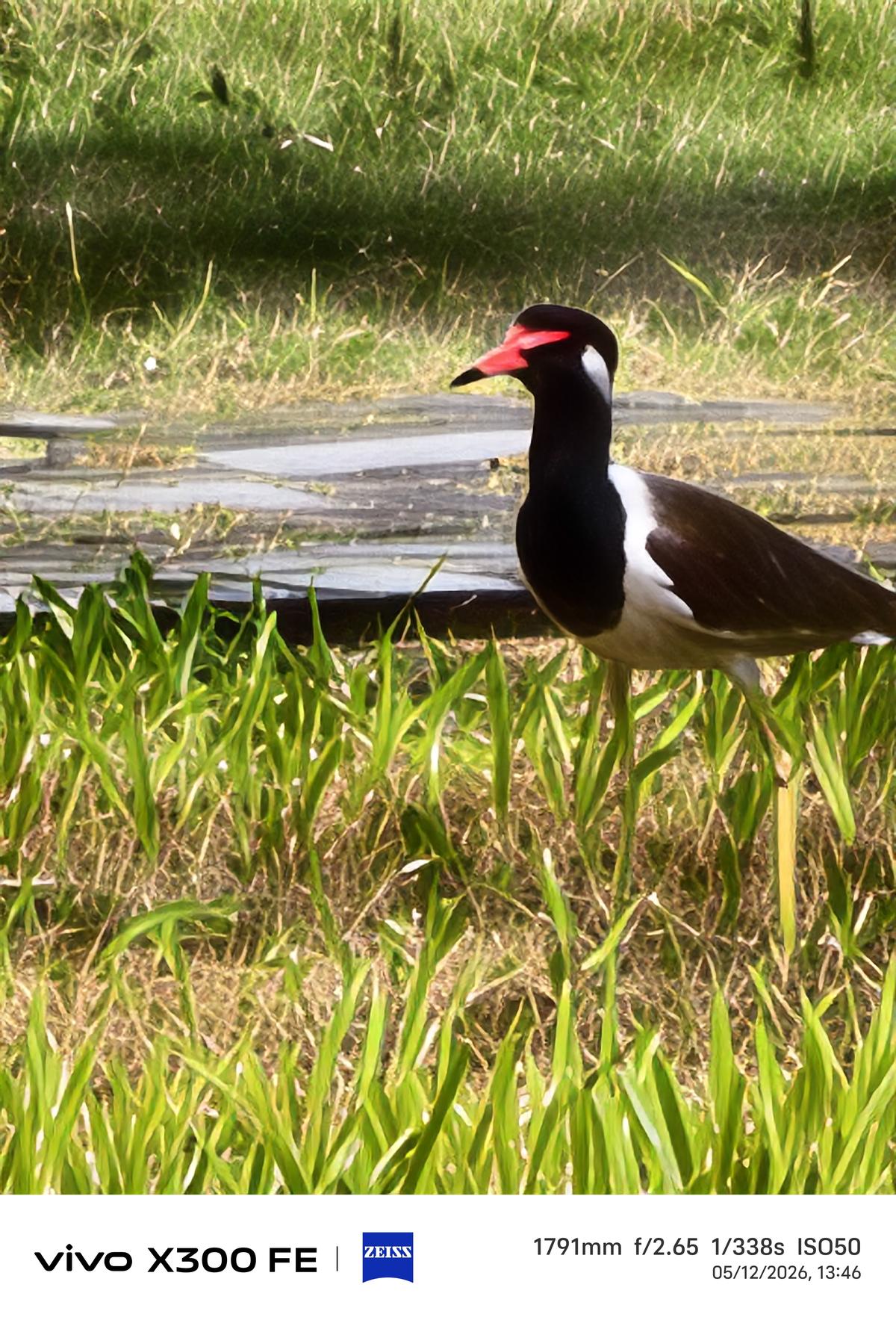
Vivo X300 FE camera sample
| Photo Credit:
Haider Ali Khan
Now, this is where things become interesting. Vivo has not jumped into the usual megapixel race with the FE variant. Instead, it has tried to create a photography experience. The Vivo X300 FE features a 50 MP Sony IMX921 primary camera with OIS support, an 8 MP ultrawide sensor and a 50 MP Sony IMX882 telephoto lens with 3x optical zoom. On the front, there is a 50 MP ZEISS camera for selfies and video calls. Compared to the Vivo X300, the FE may look less aggressive in terms of pure hardware. The X300 had more premium camera positioning and stronger imaging hardware on paper. However, Vivo introduces something different here: support for the second-generation telephoto extender. This is where the FE starts creating its own identity.

Vivo X300 FE camera sample
| Photo Credit:
Haider Ali Khan
The telephoto extender changes how you use the camera. The setup adds another 2.35x optical zoom on top of the telephoto sensor and effectively pushes the focal reach to nearly 200mm. During usage, I was able to clearly capture an Indigo aircraft in mid-flight, and that itself says a lot. Normally, distant subjects at such a range begin losing structure and clarity. Here, the plane retained shape and details remained visible without appearing like an AI-generated patch of pixels. Capturing moving subjects from a distance also turned out surprisingly good. Objects such as birds, distant buildings and even subjects in motion maintained respectable sharpness.

Vivo X300 FE camera sample
| Photo Credit:
Haider Ali Khan
What impressed me more was that the extender was not simply increasing zoom numbers. It actually retained image quality. Photos at optical range carried strong details and vibrant colours. Textures on buildings, patterns and distant objects remained visible. Fast shutter handling also played an important role because shots rarely ended up blurry. However, there is a limit too. Once you begin pushing aggressively beyond around 300mm focal lengths, the image quality starts taking a hit. At around 600mm, AI processing visibly steps in. The images remain usable, but you can clearly notice smoothing and software intervention trying hard to recover the details. That said, for most people using the device for photography and travel, the extender absolutely delivers.
Daylight photography on the Vivo X300 FE is genuinely impressive. Images carry a premium flagship character. Details are abundant and dynamic range remains strong. I particularly liked how shadows were handled because the camera does not aggressively brighten everything. There is enough contrast and depth in the scene. Colours do lean slightly toward Vivo’s signature punchier style, but they still stay relatively close to natural tones. Compared to some competitors that oversharpen photos for social media appeal, the FE finds a safer middle ground.
The ultrawide camera also performs better than expected. Edge distortion remains controlled and colour consistency with the primary sensor stays mostly intact. This becomes important because many phones struggle to maintain the same colour science across cameras. Vivo manages that transition quite well.
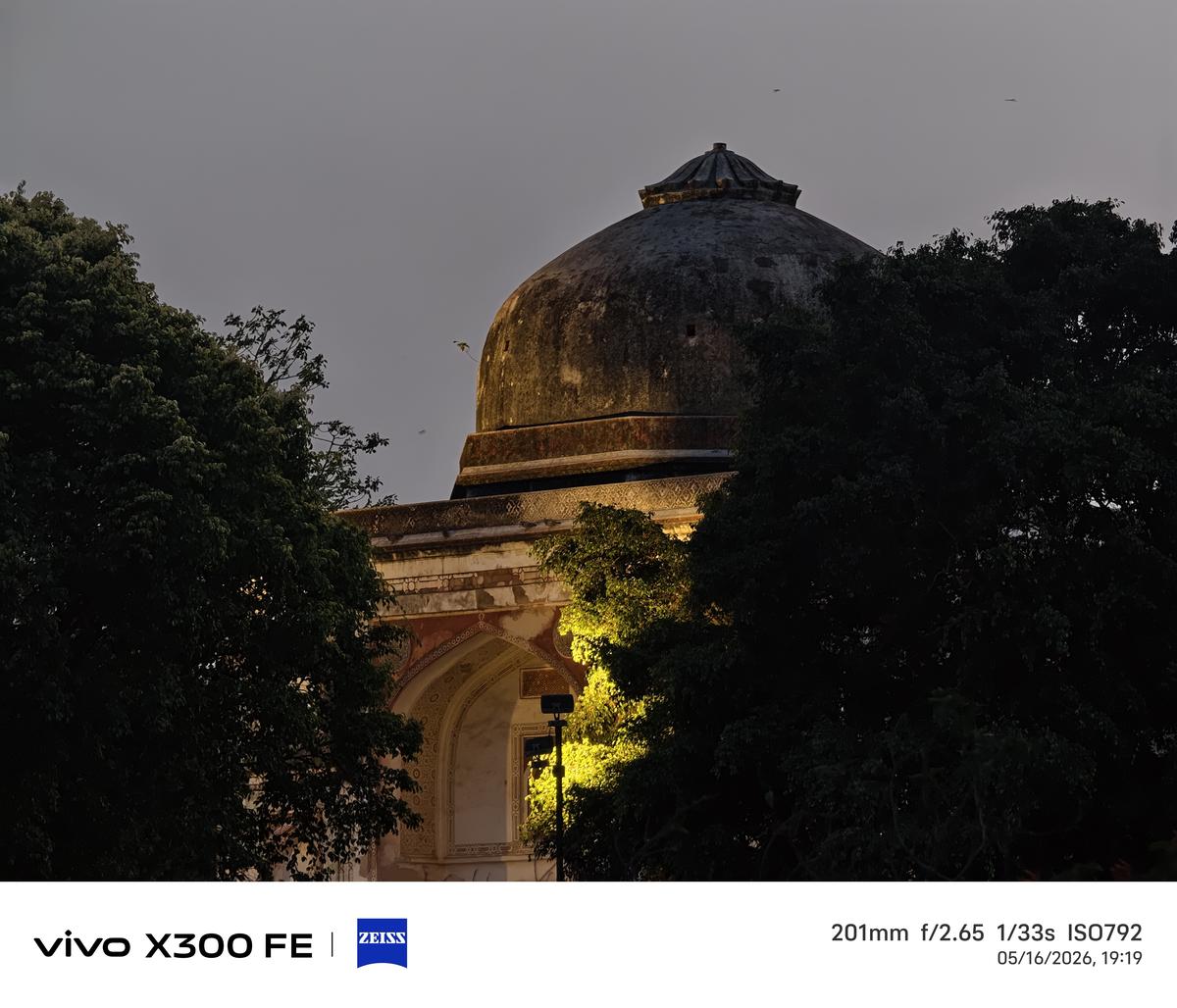
Vivo X300 FE camera sample
| Photo Credit:
Haider Ali Khan
Portrait photography is where Vivo again reminds everyone why it takes cameras seriously. Portraits clicked from the telephoto sensor looked excellent. Edge detection remained clean and facial details were preserved nicely. Hair strands, skin texture and even smaller facial details stayed intact. The bokeh effect also looked natural and avoided that artificial cut-out appearance. More importantly, skin tones looked close to reality rather than aggressively beautified. Portraits simply looked polished.
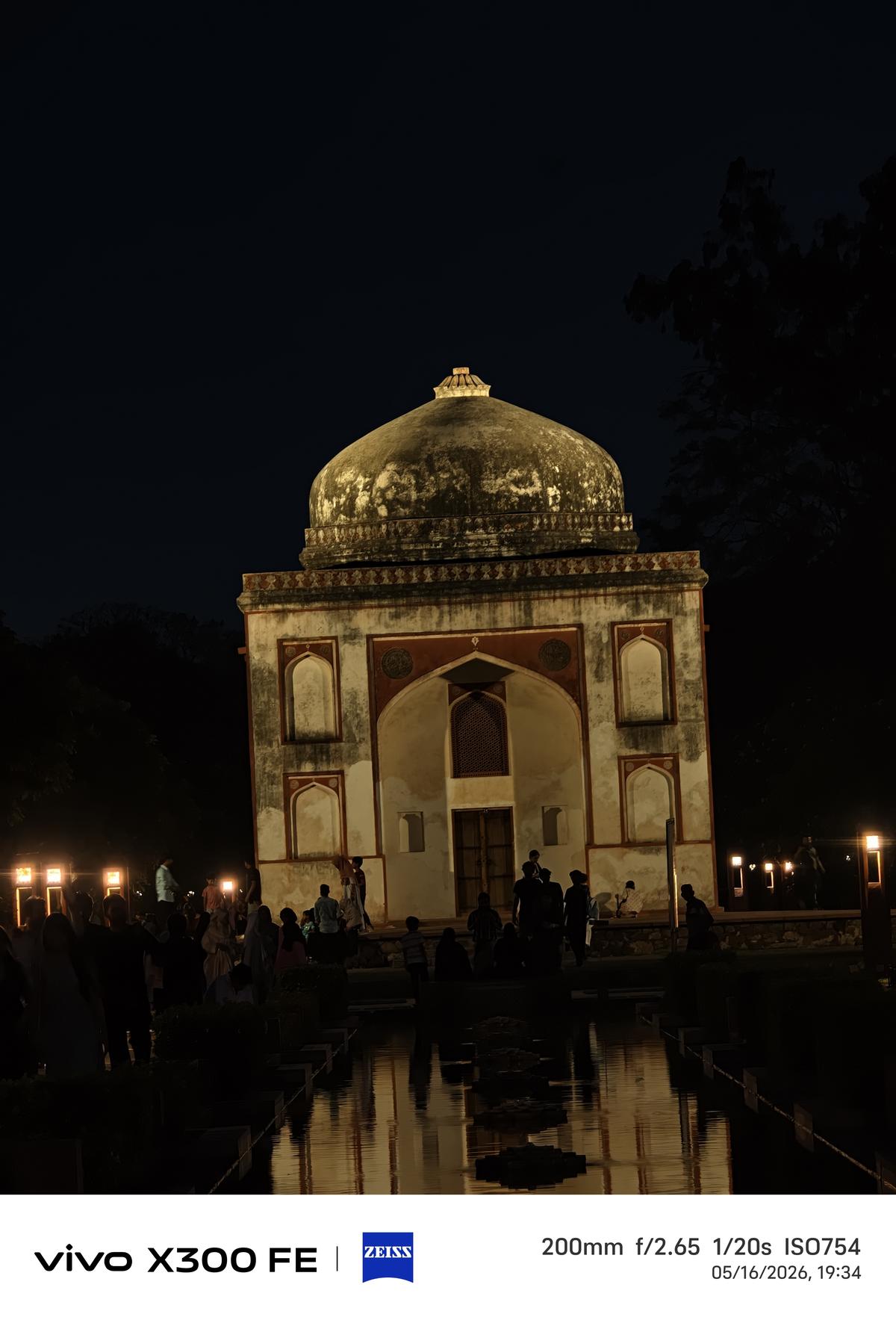
Vivo X300 FE camera sample
| Photo Credit:
Haider Ali Khan
Night photography also deserves praise. The phone handles low-light scenes with confidence. Lens flare remains controlled and noise reduction works well without completely softening details. Street lights, reflections and darker areas retain balance. The scenes stay loyal to what you actually see instead of becoming unrealistically bright. There is AI enhancement happening in the background, but the processing does not destroy image texture.
Selfies from the 50 MP front camera come out detailed and vibrant. Exposure handling is balanced and the camera avoids excessive sharpening. Skin tones looked pleasant and facial details remained intact. Video recording is flexible, with support for up to 8K recording via the main sensor. There are still minor inconsistencies when switching lenses during video capture, but overall the Vivo X300 FE creates an experience where photography feels enjoyable rather than technical. That perhaps becomes its biggest strength.
Battery
The Vivo X300 FE packs a larger 6,500 mAh battery when compared to the Vivo X300’s 6,040 mAh unit. This is one area where the FE takes a clear lead. The battery life of the Vivo X300 FE was genuinely impressive, and comfortably lasted for more than a day with heavy use.
Charging is handled through 90W FlashCharge. Now, wireless charging joins the package too, with 40W support. Going from low battery to full charge takes around 40 minutes. Compared to the Vivo X300, the FE feels more endurance-focused.
Verdict
The Vivo X300 FE is supposed to be the successor of the Vivo X200 FE, but its proximity to the Vivo X300 has sparked comparisons. The obvious question remains whether the FE justifies its existence when the Vivo X300 already exists.
The answer depends on what matters to you. The Vivo X300 is still stronger in raw performance and camera hardware. However, the X300 FE introduces a fresh design language, a bigger battery, longer software support and the telephoto extender experience.
The pros are easy to identify: compact design, reliable cameras, strong battery and practical software. The downside is equally visible too. Performance numbers sit behind the X300 and the camera extender costs you extra. But if photography and all-round balance matter more than benchmark victories, the Vivo X300 FE makes a solid case for itself.


